
Crisis? What crisis?
When it comes to this regime, given the level of compliance in advance, you could be forgiven for asking. What crisis? Does it involve sacrifice? If so, count me out.
First published on Substack, 3 August 2026. Read the original ›
Those of us observers who comment on US politics and have the audacity to ask questions of the Democratic establishment are often met with the same refrain. ‘We already know we have a problem; nobody ever seems to set out the solutions. It’s certainly a refrain in my comments from time to time, and I have to tell you it irritates me beyond measure because I have invested a lot of time in laying out solutions that forever seem to fall on deaf ears. So I thought I might take a moment to explain them once again and put the matter to bed once and for all.
My last attempt to offer a solution was in a two-part post from March 28th of this year, part one of which, to save me repeating myself, is linked below:
If you want to go back further and examine my original thoughts on the matter, you have to go back to last year, to October 2025, when I posted the piece below:
There then followed by a further piece later in the same month:
These three pieces were just three of more I have posted on the subject, but I wanted to try and expand on my thinking because my thoughts have evolved since I first began sharing them. If it’s one thing I have learned since 2019, when I first started engaging at length in US politics, it is that it’s just as challenging to engage with those on the far left as it is to engage with those on the far right. One political curse the Democrats are forced to live with is that they operate a BIG tent, especially as Republicans have shrunk their tent to the size of Trump’s brain and shifted it so far right it’s a cult.
As I have had a fairly large account on X for the duration of my political engagement, I became acutely aware that to criticise Dem policy or establishment figures was a sure-fire way to see you cast outside the tent and labelled disloyal. This was the whole reason I decided to write on Substack because I found that attitude infantile and frankly absurd. I made myself a promise when I came here that I would simply share my genuine thoughts without fear or favour. If I saw something that was wrong, I followed the guidance of the late great John Lewis:
"When you see something that is not right, not fair, not just, you have to speak up. You have to say something; you have to do something."
I find that if I think, ‘What would John do?’ I can’t go too far wrong. While I am not a US citizen and technically don’t have a horse in this race, it would be naive to take that position, because this is no longer a US problem; it’s now an existential global threat against which we all have an obligation to defend. Don’t misunderstand, I applaud loyalty, and I get it. However, not at the expense of speaking the truth. I was very open about the fact that Joe Biden should not run again in 2024. It won me few friends, and I was often told that sharing such thoughts was ‘unhelpful’.
One thing I have always been good at is reading the room, and once you have a candidate, you are constantly trying to protect from the media; you have a BIG problem. The debate catastrophe was no surprise to me; the only thing I was surprised about was that it had taken so long for people to wake up, but by then it was too late, and the rest is history. At no point, despite how I felt about the fact that Kamala Harris would not have been my choice of nominee, did I do anything but offer my full-throated support, and I did a series of Ads to support the campaign, of which this was just one.
To win elections, there has to be an emotional connection to the electorate. I actually think that Kamala Harris did a remarkable job given the hand she was dealt. However, once the campaign was deaf to the concerns of working-class Americans who were struggling to put food on the table, and the now Liar in Chief was selling them a fairytale that he felt their pain and would address the affordability issue on ‘Day one’. The game was over. While Democrats chased the middle-class vote and failed to deliver full-throated condemnation of the vengeful retribution being meted out on innocent Palestinian women and children, it was always going to be an uphill battle.
The cardinal sin following the election defeat was making no apology for placing the fate of America in the hands of a convicted criminal, pathological liar, and adjudicated rapist, who had stolen from his own charity. Instead, they did a ‘We told you so’ number and then silence. That was it, NOTHING until AOC and Bernie picked up the baton and went on the Oligarchy tour. That was the first sign they were even still alive. So what are the solutions?
First and foremost, there should have been a forthright public apology for failing the American people, accompanied by a promise to examine everything that went wrong with a view to presenting a transparent report with an action plan to fix what went wrong. Instead of doing that, they had to be dragged kicking and screaming by their base to publish what was frankly a joke autopsy. No wonder they didn’t want it in the public arena.
Following an apology, the next requirement should have been to prepare what I like to call a ‘shadow brief’. In the UK, we have what is called a ’Shadow Cabinet '; Democrats could learn much from it. The party selects a shadow team to match the policy brief of the party in government. This then allows members who would likely form a Democratic administration to lean into a policy brief and help formulate an alternative narrative that can be shared with the voting public. Not only does this help zoom in on key policy responses to government action, but it also introduces the Shadow Cabinet member to the public, providing them with exposure and helping the public better understand how they might operate in government.
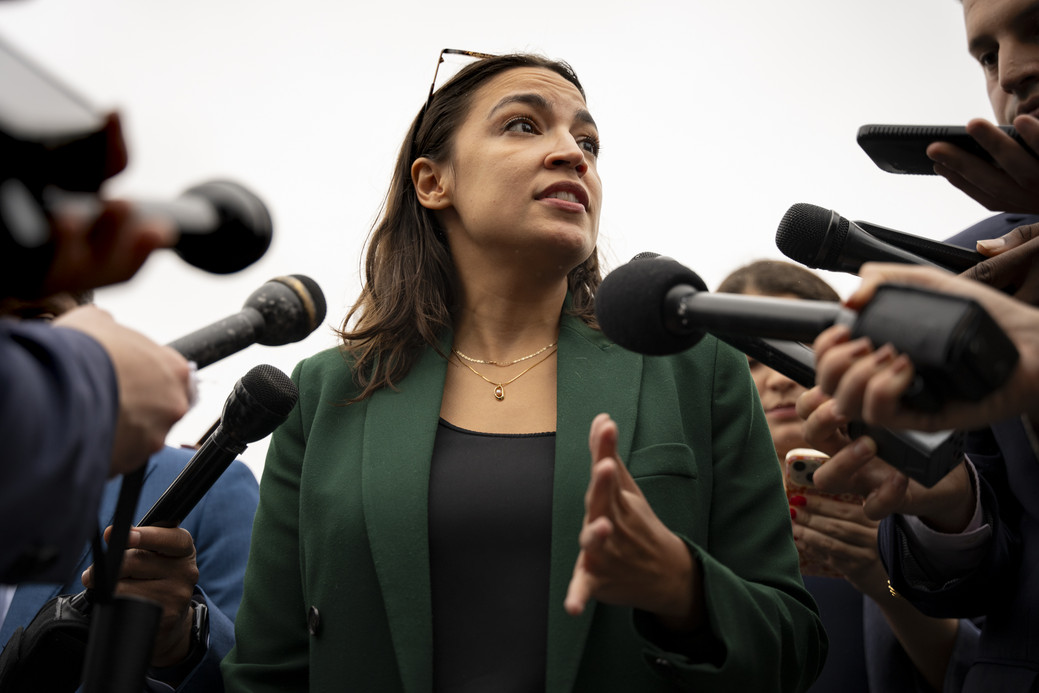
It’s no big deal to do a cabinet reshuffle as and when required. It’s all about getting the electorate to become familiar with the opposition policy position and political figures on a regular basis. This means that in the run-up to an election, Democrats could present a more cohesive message to voters to help humanise the alternative proposition. It would also help during any transition to quickly establish a familiar face tied to mission-critical policy. Not only is it a mechanism to bring some coherence to the message, but it also means that there is always an opposition voice presenting a political alternative to the position of the party in government. The media can then report, for example, ‘and the shadow spokesperson for defence said……..’
I can think of no better method than presenting a professional opposition agenda before the public throughout their term in opposition. It removes the common tendency to just sit back until the end of the current election cycle, because as a shadow cabinet member you always have to be on top of your brief. This is about taking a joined-up thinking approach to opposition.
Term limits have always presented a bit of a dilemma to me, because I want effective legislators to be able to continue. Having said that, I believe that there should be some limitations, if only to make the representative bodies better reflect the makeup and ambition of the nation. The average age of the Senate is 65 years old; this tells you all you need to know: how can the cultural tapestry of the day be reflected in a house full of people in the autumn of their years? It simply doesn’t make sense. Of course, voters can only elect those put forward for the job, so the political parties have a part to play too. The average age in Congress is not much better at 58.
I am a big believer in the creation of a Council of experienced legislators which could be made up of a small number (say 17) of senior members with experience of governing and/or legislation, having held public office for a minimum period. This council should be made up of equal numbers of Republicans and Democrats, with one less Independent. The makeup should be 6 Republicans, 6 Democrats and 5 Independents. There should be a 2 term limit, and nominations for the council should be presented to the public every four years to fill empty seats as part of the General Election Process. The body itself should have veto power over any legislation proposed under reconciliation and should serve as the gatekeepers for presidential nominations to Cabinet, removing that power from the Senate. This should remove the partisan inevitability of appointing confirmable nominations. Any acting positions should last only 6 months, after which the post must be filled by a confirmed nominee.
Members of the Council of Legislative Elders should NOT be eligible to receive PAC money; campaigns for election should be limited to an equal and fixed, publicly funded allowance, with no campaign allowed to begin until 6 months before the General Election. The power of impeachment should also reside with this body, while the power to instigate impeachment proceedings should result from a joint vote of the House and Senate. The case for and against should then be presented to the Council, whose decision would be final. Given there are only 5 Independents on the body, you would not require a casting vote in the event of a tie with any Council votes.
With regard to Congressional and Senate term limits, I would suggest 3 terms in the House and 2 terms in the Senate; then, to serve on the Council, you would have to have served two terms in either legislative body or a combination of both. The Council of Legislative Elders should be a completely independent, taxpayer-funded body with a two-term limit. It should also have subpoena power and sanction enforcement powers. Council members would be subject to strict financial transparency regulations to ensure that any attempt to take financial inducements received during their tenure would result in mandatory prison time (term to be decided).
This structure would give voice to Independent lawmakers in matters of critical importance. This is important given that registered independents are now the largest voting constituency in the country. I also am of the view that the 60-vote rule in the Senate should be reduced to 55, to better reflect a mandate from the electorate. The very reason a government under normal rules can’t get things done is that the 60-vote threshold in modern-day politics is a significant barrier to progress.
I am a big fan of publicly funded elections too, in order to get dark money out of politics. It goes without saying that stock trading should be banned for all elected representatives and their immediate family. It is beyond ludicrous that those voting for or against measures that can affect the value of a stock should be able to trade that stock based on insider knowledge. I believe that the salaries for elected members should be increased to better reflect the responsibility they hold. However, they should NOT be paid during any government shutdown. All staff members of elected representatives should receive a living wage commensurate with their experience.
On elections, voting should be mandatory as it is in Australia. General and midterm elections should be public holidays. A specific budget to secure elections from domestic and foreign interference should be run by an INDEPENDENT body overseen by the Council of Legislative Elders, comprising security specialists in cyber and propaganda deterrence. It should be mandatory that, when a new administration takes office, three mandatory, extensive, on-camera public debates be held within the first 100 days on Immigration, the economy, and national security.
No legislative agenda should be allowed to proceed until these debates have taken place. This should encourage a new government to hold these as soon as possible, and should act as a thermometer on where there can be bipartisan agreement. This also ties in with the creation of a shadow Cabinet for the opposition whose spokesperson can lead their party’s response on these three key areas of policy. There would be no obligation to act on the discussions during these debates. However, there should be a minimum attendance level limit set to ensure respectful, substantive dialogue takes place.
These debates would then be a matter of public record that voters could refer back to throughout the government’s tenure. These steps are not unreasonable and would ensure that the public saw extensive debate on the floor on the key issues that are often third-rail policies that are important to the American public. In addition, there should be a non-binding optional public vote to measure public sentiment on the positions of the government and opposition.
Tomorrow we’ll look at the all-important issue of taxation and the key strapline of ‘Make Tax Fare Again '. Let it not be said that I’m incapable of thinking outside the box, which it seems to me is an imperative if we are to avoid the same old, same old politics that perpetuates the status quo. Of course I know none of it will ever happen, but I thought I needed to address the challenge that people like me are good at offering criticism but absent on solutions. I don’t think I have been, but I hope this two-part post puts that accusation to bed. Obviously, feel free to take my suggestions apart.